No in Morse Code | The Exact Pattern, Sound and Tap Guide
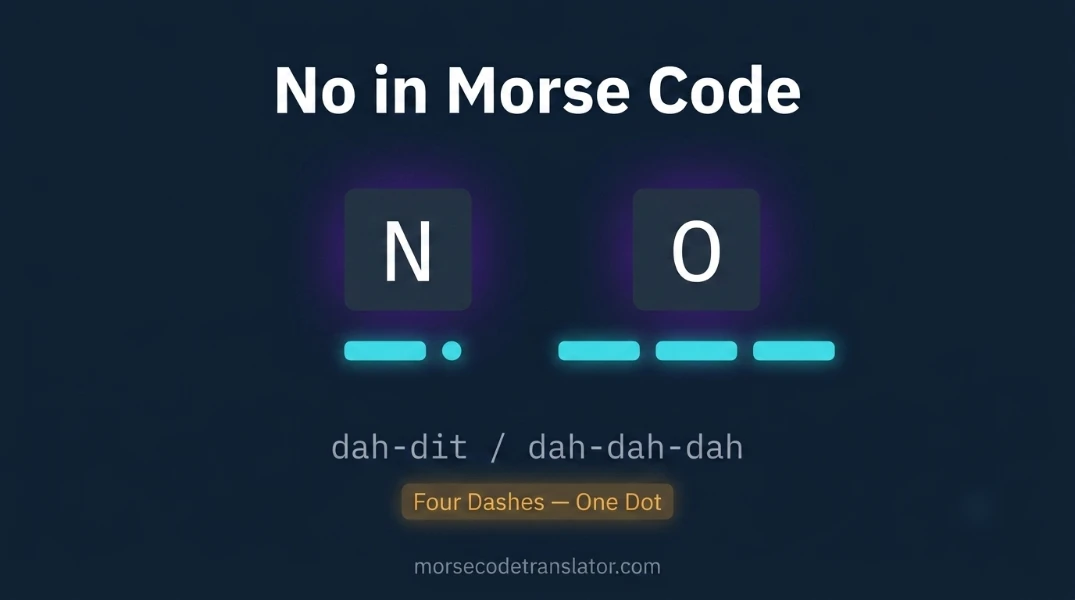
No in morse code is -. —
Two letters. Five signals. NO in morse code is dominated by dashes — long, weighted signals that match the finality of the word itself.
N is dash-dot. O is three dashes. Together they roll out as dah-dit dah-dah-dah — impossible to confuse once you hear it.
This guide gives you the exact pattern, how to say it, tap it, and flash it — plus yes and no in morse code side by side, radio shorthand, and related phrases. All patterns follow the ITU-R M.1677-1 standard.
What Is No in Morse Code — The Exact Pattern
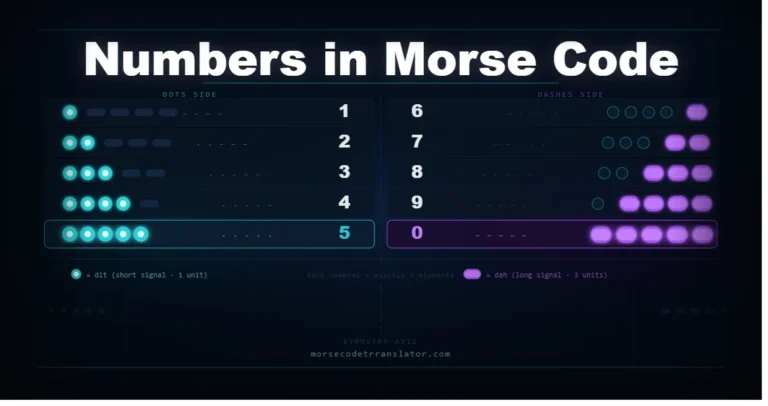
No uses two letters: N and O. Both are high-dash patterns — N has one dash and O has three.
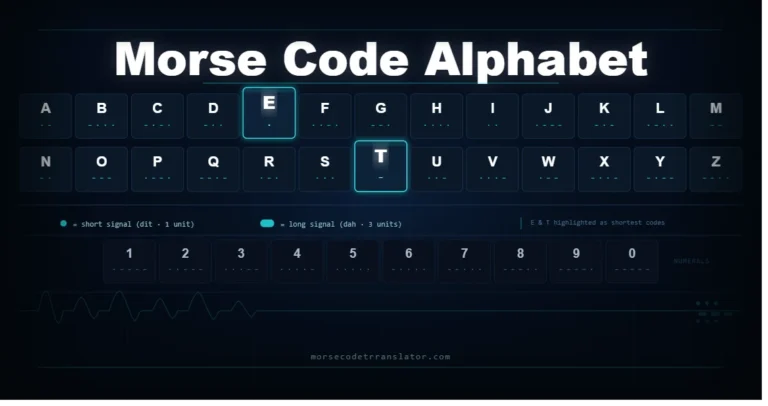
Letter | Morse Code | Signal Type | Spoken Sound |
N | — . | 1 dash, 1 dot | dah-dit |
O | — — — | 3 dashes | dah-dah-dah |
Full word — no in morse code: -. —
Copy and paste format: -. —
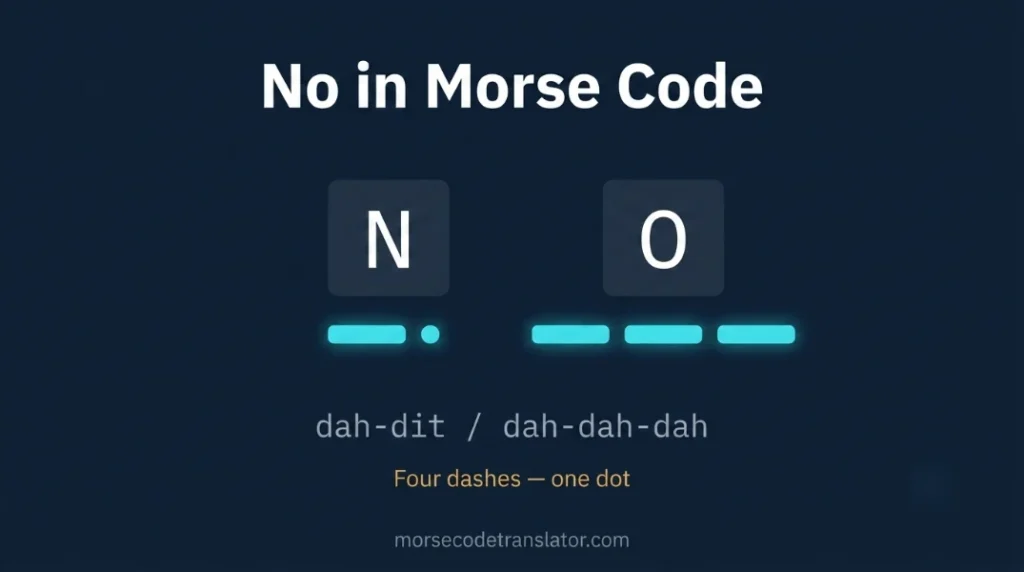
Spoken out loud: dah-dit / dah-dah-dah
Total signals: 5 — four dashes and one dot
NO is dash-heavy — four of five signals are dashes. The single dot in N is what separates NO from OO, so that one quick tap is critical.
How to Say No in Morse Code Out Loud
Say: dah-dit then dah-dah-dah
Dah is the spoken name for a dash — longer and rolling. Dit is the spoken name for a dot — short and sharp. Professional CW operators never say dot or dash. The three dahs of O roll out like a closing statement, which is why NO sounds naturally final and deliberate when spoken in morse.
How to Tap No in Morse Code
Short taps are dots. Long holds are dashes.
Letter | Tap Pattern | Duration at 15 WPM |
N | HOLD-tap | dash 240ms, dot 80ms |
(letter gap) | pause | 240 milliseconds |
O | HOLD-HOLD-HOLD | three dashes, 240ms each |
The most important detail when tapping NO is the gap between N and O. If you forget to pause between the two letters, you send a completely different signal. Without the letter gap, dash-dot-dash-dash-dash blurs into an unrecognizable five-signal pattern. The three-unit pause is what makes N and O readable as two separate letters.
Practice N and O separately before combining. Once both feel clean, add the clear pause between them.
How to Flash No in Morse Code with a Light
Short flashes are dots. Long flashes are dashes.
Flash sequence for NO:
Keep long flashes for one to one and a half seconds and short flashes under half a second. Works with any light — phone flashlight, torch, or signal mirror. NO and YES are the most practiced visual response pair because they give binary answers without complex encoding.
Yes and No in Morse Code — Side by Side
Learning yes and no in morse code together builds recognition faster than studying either word alone.
Word | Morse Code | Signals |
Yes | — . — — . . . | 9 |
No | — . — — — | 5 |
OK | — — — — . — | 8 |
C (yes shorthand) | — . — . | 4 |
N (no shorthand) | — . | 2 |
According to Wikipedia’s article on Procedure Words, radio operators often use the single letter N as shorthand for a negative response. In casual HAM radio conversations, operators sometimes send a single N as shorthand for “no” or “negative” — saving time especially during contests or when bandwidth is tight. The single letter C serves the same function for affirmative responses after Q-code questions.
YES ends in three dots. NO ends in three dashes. Once you know both by sound, you cannot confuse them.
No Matter What in Morse Code and Related Phrases
Here are the most searched NO-related phrases fully encoded:
Phrase | Morse Code |
No | -. — |
No you | -. — / -.– — ..- |
No u | -. — / ..- |
No matter what | -. — / — .- – – . .-. / .– …. .- – |
Type any of these into the free morse code translator on this platform to hear the audio at your chosen WPM.
Frequently Asked Questions
Copy No in Morse Code Right Now
No in morse code is -. — — five signals, four dashes, and the most deliberate-sounding word in basic morse vocabulary. Type NO into the free morse code translator on this platform to hear the dah-dit dah-dah-dah pattern, adjust WPM and pitch, and download the WAV file.
For the YES pattern and full comparison, visit our Yes in Morse Code guide. For the complete letter reference, visit our Morse Code Alphabet chart.