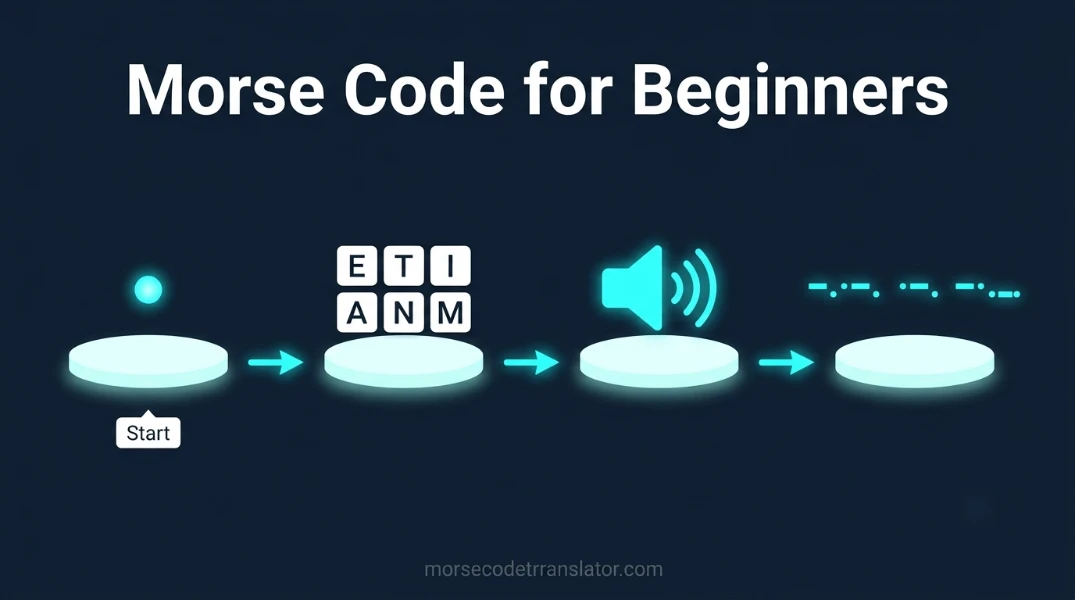
Morse Code for Beginners — The Complete Step by Step Learning Guide
Learning morse code feels impossible when you start with a full chart of 26 letters. It is not impossible — you are just starting wrong.
This beginner guide skips the overwhelm and gives you the exact sequence that works. Start with two letters. Learn by sound. Practice ten minutes a day. Most beginners decode their first words within a week.
Every technique is backed by licensed HAM radio training methods and the ITU-R M.1677-1 international standard.
What Is Morse Code — The Basics Every Beginner Needs to Know
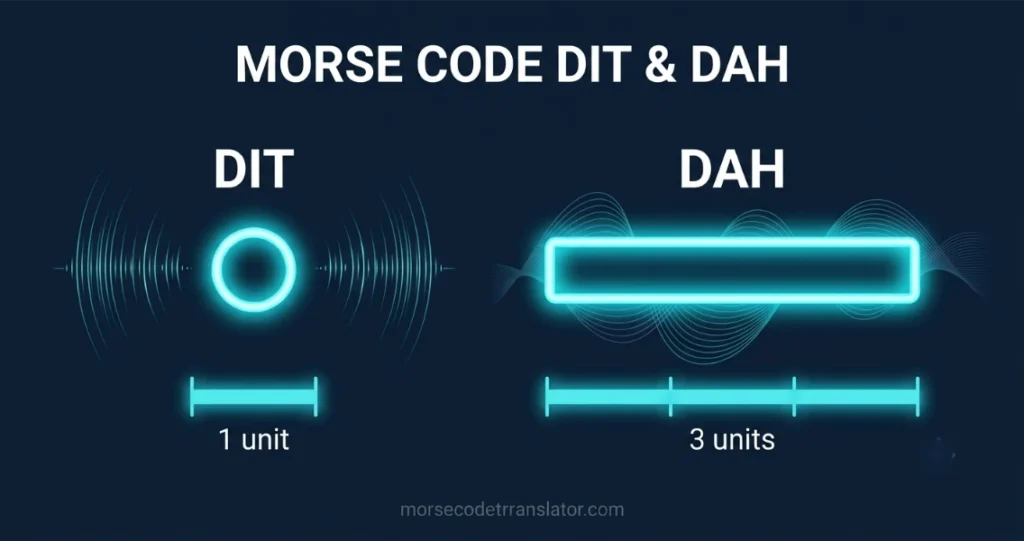
Morse code turns every letter, number, and punctuation mark into a unique sequence of two signals. One short. One long. That is the entire system.
The two building blocks:
Every letter, word, and message is just a combination of these two sounds in different sequences.
The four spacing rules:
According to ITU-R M.1677-1, these timing ratios are fixed. Getting them right from the start is what separates beginners who progress from those who plateau.
The Biggest Beginner Mistake — And How to Avoid It
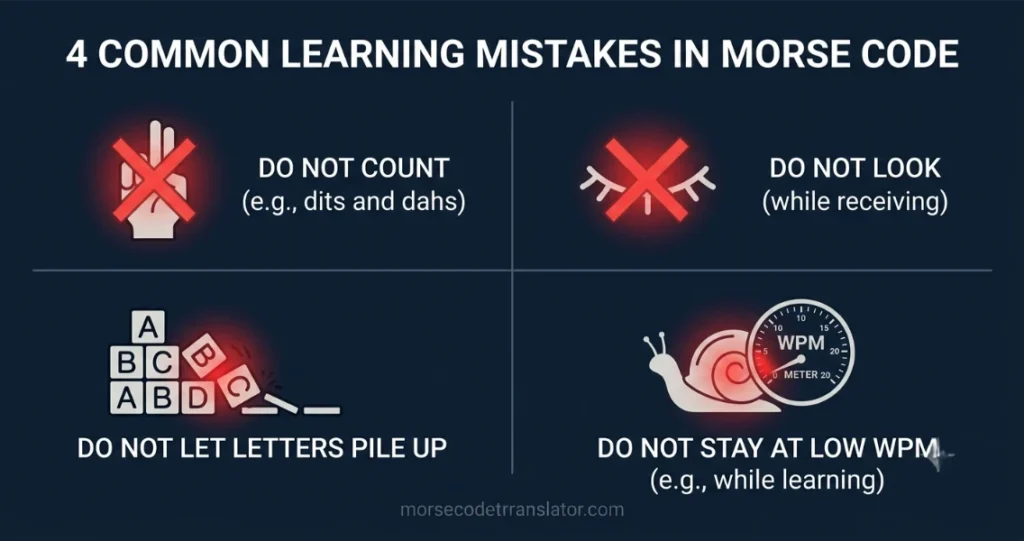
Most beginners open a morse code chart and try to memorize all 26 letters at once. This builds the wrong skill. Your brain starts counting dots and dashes — and at any real transmission speed, counting collapses.
The right skill is sound recognition. Hear the letter C and know it instantly — not count dash-dot-dash-dot in your head.
Never practice so slowly that you count symbols. Train your brain to hear each letter as one complete sound from the very first session.
This is the core principle behind the Koch method, developed by Ludwig Koch and popularized by Donald R. Farnsworth (W6TTB). According to ARRL training documentation, operators who learned at full character speed consistently outperformed those who started slow and tried to speed up later.
How to Learn Morse Code for Beginners — The Right Starting Order
Do not learn the alphabet in order. Learn by signal complexity.
Stage 1 — Single signal letters (start here)
Letter | Morse | Why Learn First |
E | . | One dot — shortest code in the system |
T | — | One dash — second shortest |
These two letters are the foundation. E is the most common letter in English. T is the second most common. Mastering both means you already recognize two signals that appear in almost every English word.
Stage 2 — Two signal letters
Letter | Morse | Pattern |
I | . . | Two dots |
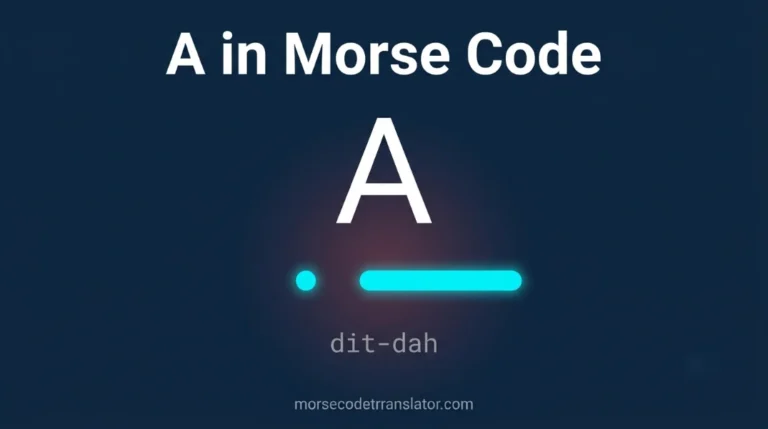
A | . — | Dot then dash |
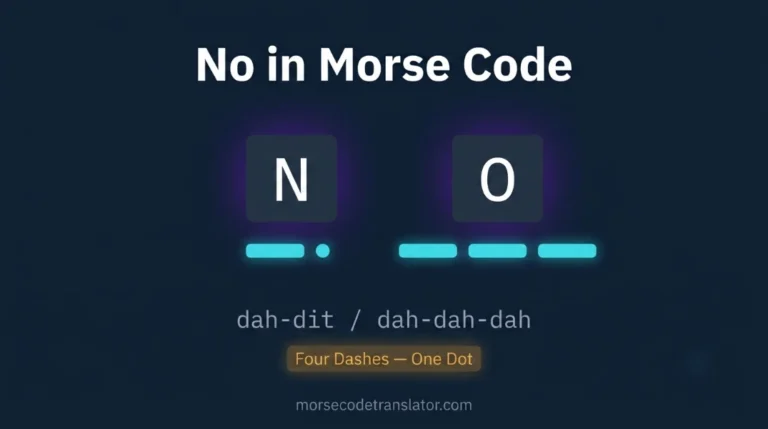
N | — . | Dash then dot |
M | — — | Two dashes |
A and N are mirror images. I and M use the same signal type but different counts. Learning mirror pairs burns patterns into memory faster than random memorization.
Stage 3 and beyond — Add two letters per day
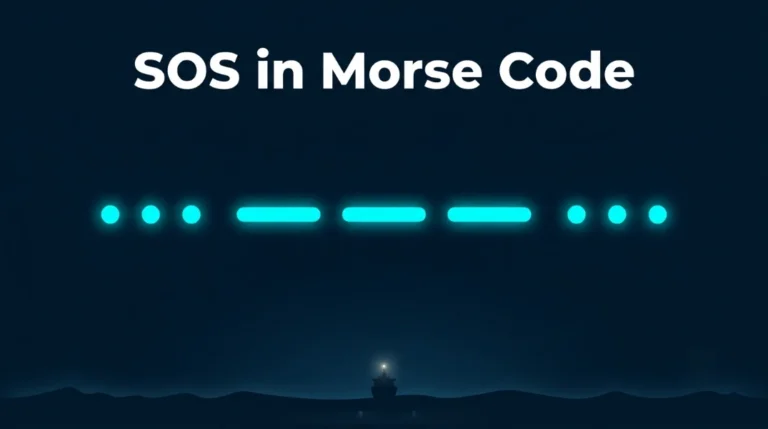
After mastering the six letters above, add B, C, F, H, S, O, R, D and the remaining alphabet two letters at a time. Review everything from the previous session before adding anything new. S and O together spell SOS — the universal distress signal and one of the most memorable practice words for any beginner.
How to Practice Morse Code as a Beginner — Daily Routine
Ten minutes a day beats two hours on weekends every time. This is not an opinion — it reflects how procedural memory consolidates during sleep.
Recommended daily beginner routine:
Time | Activity | Purpose |
Minutes 1 to 2 | Listen to current letters using audio playback | Warm up recognition |
Minutes 3 to 6 | Practice two new letters at 15 to 20 WPM | Learn new patterns |
Minutes 7 to 8 | Run a decode quiz on all letters learned so far | Test retention |
Minutes 9 to 10 | Listen to a short real word using only known letters | Build confidence |
Recommended WPM progression:
According to MorseFree.com, 13 WPM character speed with Farnsworth spacing is the sweet spot for complete beginners. Characters sound correct at speed while the extra spacing gives your brain processing time.
Set the audio playback on our morse code translator to 15 WPM, type a short word using only letters you know, hit Play, and try to copy what you hear before looking at the output.
Common Beginner Mistakes in Morse Code
These are the four mistakes that slow down almost every beginner. Knowing them upfront saves weeks.
How Long Does It Take to Learn Morse Code as a Beginner
The honest answer depends entirely on one variable — daily consistency.
Milestone | Description | Time With Daily Practice |
First letters recognized | Decode E, T, I, A, N, M by ear | 3 to 5 days |
Basic words | Copy short words at 5 WPM | 2 to 3 weeks |
Full alphabet | Recognize all 26 letters | 4 to 6 weeks |
Beginner fluency | Copy sentences at 10 to 13 WPM | 2 to 3 months |
CW ready | Copy at 20 WPM comfortably | 6 to 12 months |
According to MorseForge.com, most learners following a structured Koch method plan with 15 to 25 minutes daily build reliable character recognition within a few months. The ITU no longer requires morse proficiency for HAM licensing — but operators still learn it because a 5-watt CW signal travels further than a 100-watt voice transmission under the right conditions.
Tools Every Beginner Needs to Learn Morse Code
You need three things to start: a translator for audio generation, a quiz for testing recognition, and a reference chart for your current stage.
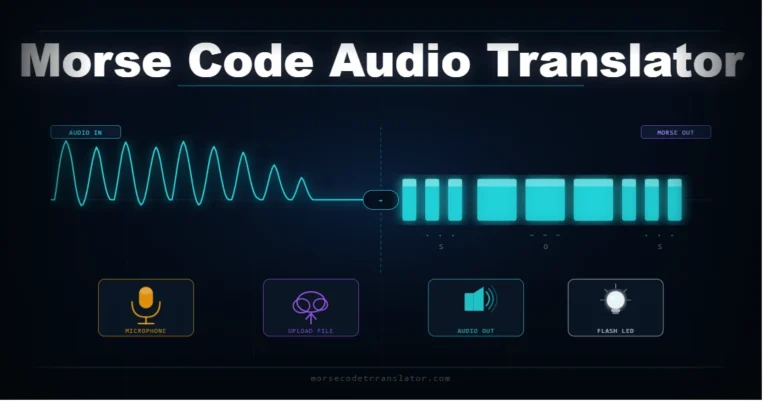
The morse code translator on this platform generates any word as audio at your chosen WPM instantly. The free morse code quiz tracks your accuracy and surfaces your weakest letters for targeted practice. The morse code alphabet chart gives you the full A to Z reference as you build your character set.
Google also offers a free trainer at morse.withgoogle.com built for Gboard users — animated visual and audio drills that complement any structured learning plan.
Frequently Asked Questions
Start Your Morse Code Journey Today
Morse code for beginners is not about memorizing a chart. It is about training your ear to recognize patterns as complete sounds.
Start with E and T. Add I, A, N, and M. Practice ten minutes daily at 15 WPM. Follow the Koch method. Avoid counting. Use our free tools to hear every letter and test your speed.
Use our morse code translator to hear any word right now. Take our morse code quiz to test what you know. Check our morse code alphabet chart for the full A to Z reference. Our numbers in morse code guide has the 0 to 9 chart when you are ready.
One Comment