SOS in Morse Code – Pattern, Meaning and How to Signal for Help
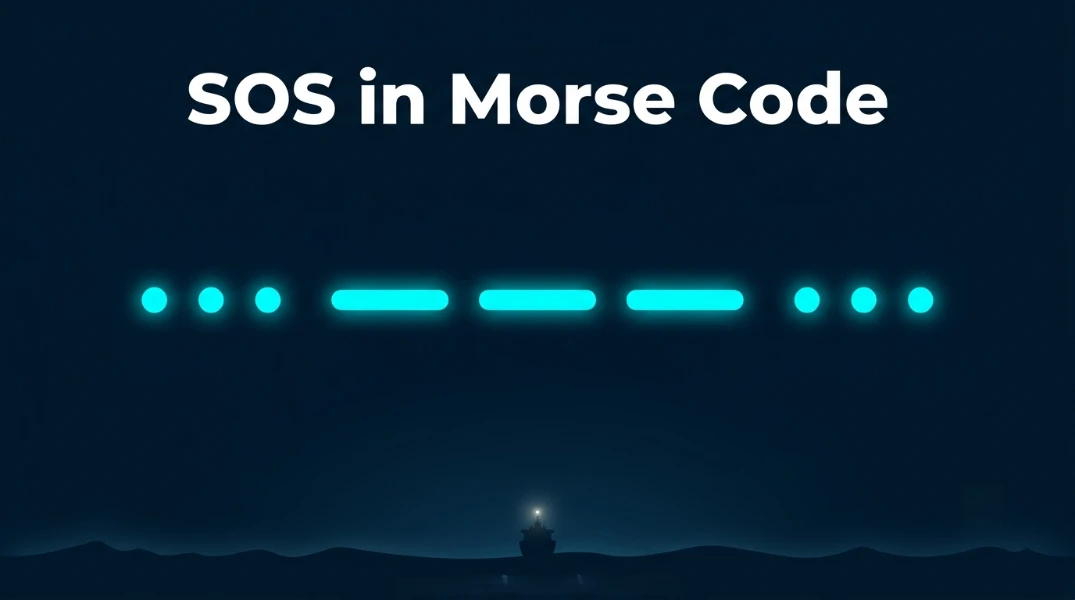
SOS in Morse code is the world’s most recognized distress signal, written as … — … — three short signals, three long signals, three short signals again. Sailors, pilots, hikers, and survival instructors all learn it for the same reason: it works without electricity, language, or technology. This guide explains what SOS in Morse code means, how to send it by flashlight, tapping, sound, or ground marking, and why it has saved lives for over a century.
What Is SOS in Morse Code?
SOS in Morse code translator is expressed as … — … — the letter S (three dots), the letter O (three dashes), and S again (three dots). It is transmitted as one continuous block with no pauses between the letters. That unbroken rhythm is what separates it from any other Morse code sequence.
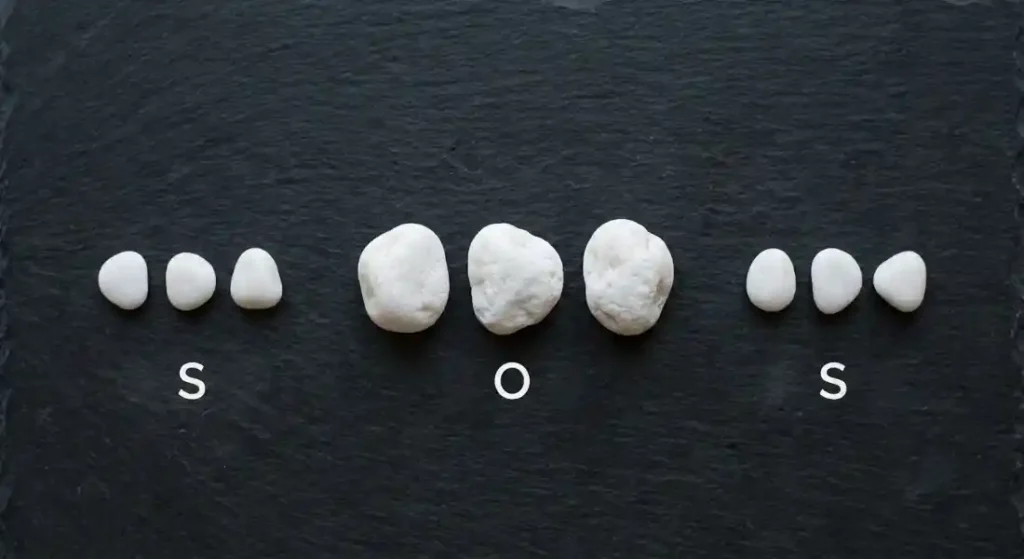
Signal | Morse Pattern | What It Means |
S | · · · | Three short dots |
O | — — — | Three long dashes |
S | · · · | Three short dots |
Full SOS | · · · — — — · · · | Sent as one unbroken prosign |
The pattern is symmetrical — it reads the same forwards and backwards. That symmetry is deliberate. Even if a receiver catches only the middle or end of the signal, the rhythm is still recognizable.
What Does SOS Stand For in Morse Code?
SOS does not stand for anything. “Save Our Souls” and “Save Our Ship” are popular backronyms invented after the signal was already in use. The letters S, O, S were chosen purely for their Morse pattern — not for their meaning.
Germany introduced SOS in its national radio regulations in 1905. It replaced the older British distress call CQD, which stood for “Come Quick, Danger.” CQD was difficult to distinguish in noisy radio conditions. The SOS pattern — nine signals in a symmetrical rhythm — was far harder to confuse with normal traffic.
In 1906, the International Radiotelegraphic Convention in Berlin officially adopted SOS as the global maritime distress signal. By 1908 it was the worldwide standard. The RMS Titanic disaster in 1912 brought it to public attention when wireless operators sent both CQD and SOS as the ship sank.
How to Do SOS in Morse Code: Timing Rules
Getting the timing right is what makes SOS recognizable. The basic unit is one “dit” — the length of a single dot. Everything else is measured from that.
Signal | Duration |
Short signal (dot / dit) | 1 unit |
Long signal (dash / dah) | 3 units |
Gap between signals in one letter | 1 unit |
Gap between full SOS repetitions | 3 units |
In practice, a simple approach works: short signals last about 1 second, long signals last about 3 seconds, and there is a 1-second pause between each. Repeat every 3 seconds.
If you are tapping SOS in Morse code — on a pipe, rock, wall, or floor — keep the rhythm steady:
Rescue teams and structural search crews are trained to listen for exactly this pattern.
How to Blink SOS in Morse Code with a Flashlight
Blinking SOS in Morse code is one of the most effective distress signals available without any special equipment. A phone screen, torch, or car headlight all work.
Step-by-step: How to blink SOS in Morse code
Point the flashlight toward the sky, a rescue aircraft, or a visible ridgeline. At night, SOS blinking in Morse code is visible for several kilometers by search teams equipped with night vision. During the day, aim at helicopters or patrol boats from a high, open position.

How to Sound, Tap and Signal SOS in Morse Code
SOS travels through any medium where you can control short and long signals. Here are the most practical methods by situation:
How to Write SOS in Morse Code on the Ground
When aircraft or satellites are involved, a ground-written SOS becomes a powerful signal. Search and rescue pilots scan for it during aerial sweeps.
Large-format SOS markings have guided recovery operations to stranded survivors in desert, arctic, and jungle environments.
How to Write SOS in Morse Code as Text
For copy-paste, notation, or tattoo purposes, SOS in Morse code is written as:
… — …
Some formats space each letter group with three spaces: . . . – – – . . .
In formal transmission, there are no gaps between S, O, and S because SOS is sent as a single prosign — one unbroken signal, not three separate letters. The continuous rhythm is what makes it a recognized emergency call rather than the word “SOS” spelled out in code.
Modern Ways to Send an SOS Distress Signal
The Morse code version of SOS is historic, but modern devices have built the same logic into everyday tools.
Method | How It Works |
Smartphone Emergency SOS | Hold the side and volume buttons — dials emergency services and shares GPS location |
Garmin inReach / SPOT | Sends SOS directly to a rescue coordination center via satellite |
EPIRB | Activates on water contact — transmits to COSPAS-SARSAT rescue satellites |
PLB (Personal Locator Beacon) | Handheld — sends 406 MHz signal to international rescue systems |
VHF Radio Channel 16 | Global maritime distress frequency monitored by all vessels and coast guards |
Even with all these tools available, the manual Morse code SOS pattern remains critical. Technology fails. Batteries die. Knowing how to send … — … by flashlight, tapping, or ground marking can reach rescuers when nothing else does.
Why SOS in Morse Code Still Matters
The ITU retired mandatory Morse code monitoring in 1999, replacing it with the Global Maritime Distress and Safety System. SOS remained the recognized emergency symbol anyway. Military survival training, wilderness first aid programs, aviation safety courses, and search and rescue operations worldwide still teach the … — … pattern as foundational knowledge.
The signal has lasted over a century because it is simple enough to remember under extreme stress and clear enough to cut through darkness, noise, and distance. It requires no power, no language, and no equipment beyond any object you can control — a light, a voice, a hand, or a stone.
Frequently Asked Questions
Why SOS in Morse Code Is Worth Remembering
SOS in morse code — . . . — — — . . . — is the most important nine-signal sequence in the history of emergency communication. From the wireless rooms of early 20th-century ships to the survival kits of modern mountaineers, this pattern has guided rescuers to people in danger for over a hundred years.
To hear the exact pattern as audio tones, type SOS into our free morse code translator above and hit Play Audio. Want to learn more? Explore how to read morse code to understand the timing behind every signal, browse the complete morse code alphabet for the full A to Z reference, or discover how morse code was invented to see how a painter’s tragedy gave the world its most life-saving pattern.